Transfer GBP to USD

Make international transfers. Transfer GBP to USD
Thank you! Your submission has been received!
Oops! Something went wrong while submitting the form.


Every time you send money from pounds to dollars, you are paying two things: a transfer fee and an exchange rate margin. Most people notice the fee, but paying attention to the exchange rate is what actually secures the best deal.
The Money Cloud partners with regulated currency transfer providers so you can see, in one place, who is offering the best GBP to USD rate right now. We work with trusted and regulated payment companies to support both personal and business payments, giving you the information to make a confident decision before you commit a single penny.
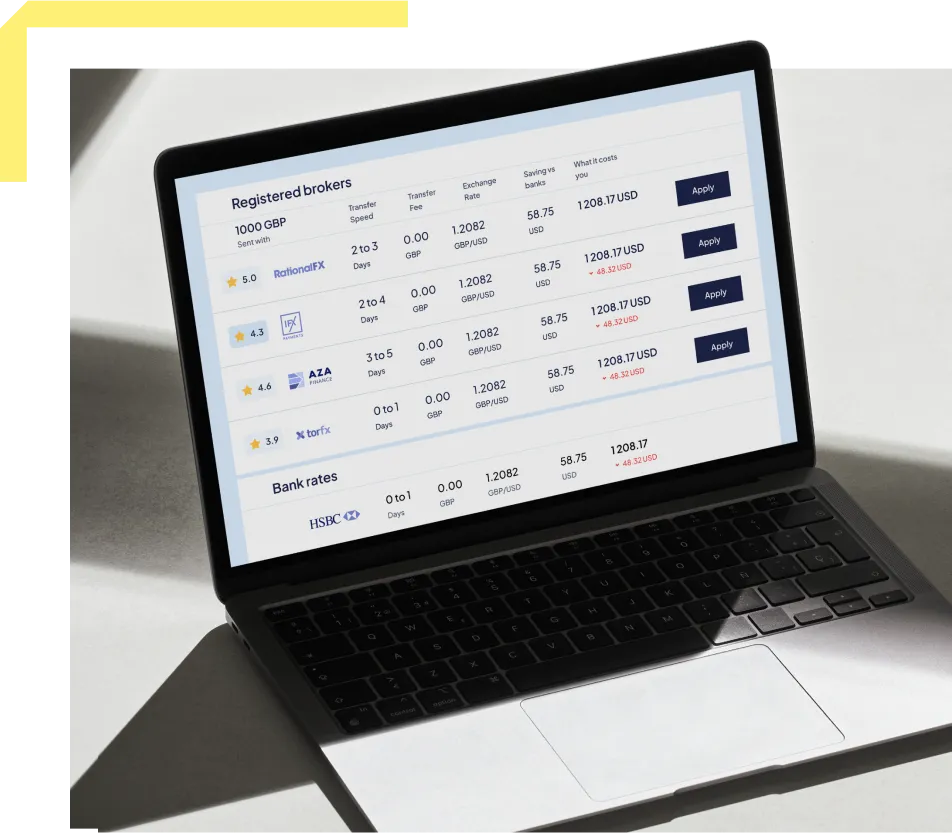
Our comparisons show you the full cost, including the exchange rate, fees and the final dollar amount, all in one place.
.webp)
There are many reasons people send and transfer GBP to USD:
- Buying property in the United States
- Paying a deposit to a lawyer, estate agent or seller
- Sending money to family living in America
- Covering university or school fees
- Moving savings into a US dollar account
- Relocating for work, study or family reasons
- Covering living costs during an extended stay abroad
A one-off transfer for a property purchase is very different from a small regular payment to a family member. The amount, the urgency and the purpose all affect which provider suits you best, which is exactly why comparing before you send is worth taking a few minutes to do.
The rate difference is real. On a £40,000 transfer, even a small improvement in the exchange rate makes a noticeable difference: at a rate of 1.25, the recipient receives $50,000; at a rate of 1.27, they receive $50,800. That is an $800 difference from the same amount sent.
Common business reasons for transferring GBP to USD include:
- Paying US suppliers or contractors
- Settling invoices from US businesses
- Covering software, marketing or platform costs billed in dollars
- Paying freelance or remote team costs
- Managing stock or import purchases
- Covering professional fees for US-based services
When you are making regular payments, even a slightly better rate compounds over time. A business sending £15,000 a month to US suppliers could save thousands each year simply by moving away from their bank's default rate.


We bring together a range of regulated providers so you can compare rates and fees side by side without having to open multiple tabs, create multiple accounts or wade through pages of small print.
We compare regulated providers. Every provider on our platform is authorised and regulated, so you can be confident your money is in safe hands.
We show the full picture. We look at exchange rates and fees together, so you can see the actual dollar amount you are likely to receive, not just the headline rate.
We cover all transfer sizes. Whether you are sending a few hundred pounds or a six-figure sum for a property purchase, there are providers suited to your needs.
We work for personal and business customers. From one-off transfers to regular business payments, we help both individuals and companies compare their options.
There is no obligation. Comparing on The Money Cloud is free and does not commit you to anything. You choose if and when to proceed.


This determines how many dollars the recipient receives. Even small differences matter for larger amounts.

Some providers charge a flat fee. Others build their cost into the rate. Some do both. Look at the total cost, not just one or the other.

Faster transfers can carry a premium. If your payment is not urgent, a standard transfer may give you a better rate.

Some providers have minimum or maximum transfer amounts. Check these against your needs before you start.
Confirm that any provider you use is authorised by the Financial Conduct Authority or an equivalent regulator. This matters if anything goes wrong.

For large or time-sensitive payments, having access to a real person can make a real difference.

Most people start with their bank because it is familiar and feels straightforward. For simple domestic payments, that convenience makes sense. For international transfers, it often comes at a cost.
Banks typically apply wider exchange rate margins than specialist providers and may charge additional fees on top, and intermediary banks can sometimes deduct further costs before the money reaches the recipient. The combination can make a meaningful difference to the final amount received, particularly on larger transfers.
Specialist money transfer providers exist specifically to handle international payments. They tend to offer more competitive rates, clearer pricing structures and, in many cases, extra features such as rate alerts, forward contracts and dedicated support for larger or time-sensitive transfers.
Neither is automatically better for every situation. The right choice depends on the amount you are sending, how quickly it needs to arrive and what level of support you need. That is why comparing before you transfer is the sensible first step.
Transfer times vary depending on the provider, payment method and receiving bank. Some transfers can arrive on the same day, while others may take one to three working days.
A specialist transfer provider may offer a stronger exchange rate than a bank, but the best option depends on the amount, fee, delivery time and provider.
The GBP to USD exchange rate can be affected by interest rates, inflation, economic data, market confidence and political news. The rate can move during the day, so the dollar amount may change if you wait.
Yes. Many people send pounds into dollars to buy property in the United States, pay deposits, cover legal fees or settle completion funds.


Get the latest in market insights and guides


